
Steroidal Glycosides from the Leaves of Caucasus Endemic Plant Solanum woronovii Pojark.: Pharmacological Insights
DOI:
https://doi.org/10.52340/GBMN.2024.01.01.69Keywords:
Biological activity, Solanum woronovii Pojark, steroid glycosidesAbstract
Background: The global distribution encompasses approximately 2,000 species of Solanum L., with 12 species identified within the geographical boundaries of Georgia, among which Solanum woronowii Pojark. stands as an endemic species. Steroid glycosides extracted from Solanum L. species exhibit a spectrum of purported pharmacological properties, including antimicrobial, anti-ulcer, antiviral, antioxidant, analgesic, anti- inflammatory, cytotoxic, and fungicidal effects. Objectives: Given the limited available data concerning the biological activities of chemical constituents derived from Solanum woronowii leaves, this investigation seeks to assess the pharmacological potential of a steroid glycosides-enriched fraction derived from this source. Methods: Experiments were conducted in vivo to evaluate the abovementioned fraction's anti-inflammatory, analgesic, and gastroprotective activities. Established methodologies were employed, including carrageenan-induced acute inflammation, "hot plate" assays for analgesia, and ethanol-induced gastric ulceration models. Additionally, antioxidant activity was assessed using the ABTS assay. Results: Pharmacological assessments revealed that the steroid glycosides-enriched fraction extracted from Solanum woronowii leaves demonstrated moderate anti-inflammatory (34%) and gastroprotective (32%) activities, along with mild short-term analgesia (23%). The fraction exhibited minor antioxidant activity. Conclusions: While the pharmacological efficacy of the enriched fraction from Solanum woronowii leaves appears less potent than conventional drugs, its potential as an alternative therapy with reduced side effects warrants consideration. Further investigation must elucidate its safety profile and role in therapeutic strategies.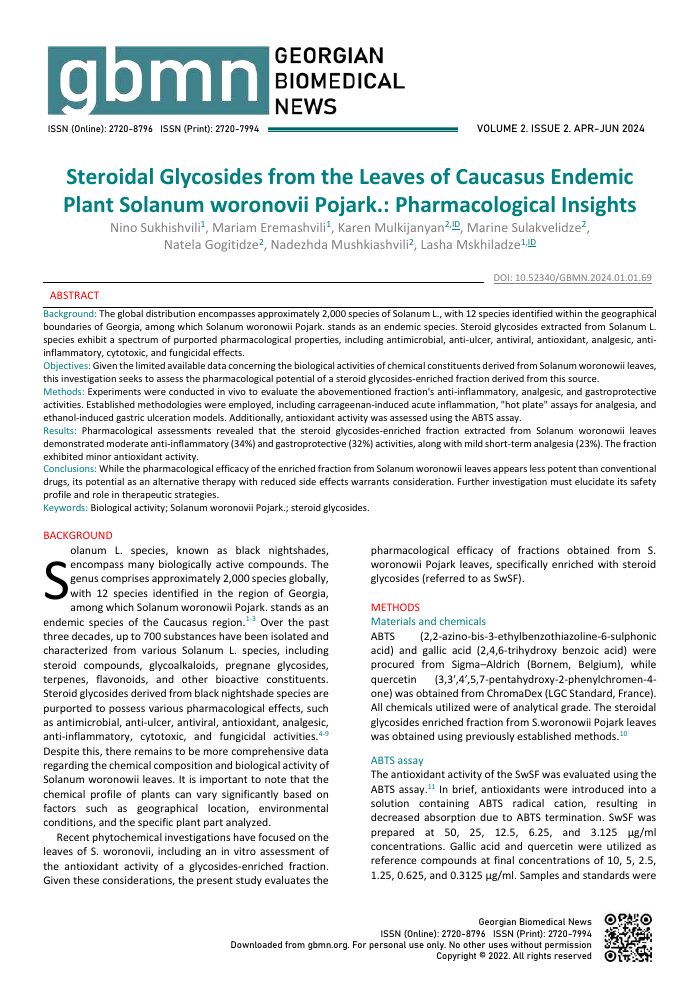
Downloads
Published
2024-04-26
How to Cite
Sukhishvili, N., Eremashvili, M., Mulkijanyan, K., Sulakvelidze, M., Gogitidze, N., Mushkiashvili, N., & Mskhiladze, L. (2024). Steroidal Glycosides from the Leaves of Caucasus Endemic Plant Solanum woronovii Pojark.: Pharmacological Insights. Georgian Biomedical and Medical Nexus, 2(2), 88-91. https://doi.org/10.52340/GBMN.2024.01.01.69
