
Use of Neurofeedback to Alter Attention Parameters in Children with Internet Addiction Disorder
DOI:
https://doi.org/10.52340/GBMN.2024.01.01.77Keywords:
Attention, internet addiction disorder, neurofeedbackAbstract
Background: The increasing prevalence of Internet Addiction Disorder (IAD) among adolescents and young adults has raised concerns about its impact on attention parameters, especially in those with comorbid attention deficit hyperactivity disorder (ADHD). Current treatment approaches, such as stimulant medications, pose potential risks, emphasizing the need for alternative strategies like neurofeedback (NF). Methods: A total of 76 children (44 boys, 32 girls), aged 9-12 years, diagnosed with ADHD plus IAD, were examined. Neurofeedback therapy was administered over six weeks, comprising 30 sessions. Attention parameters were assessed using various psychological tests adapted for the Georgian population. The study group was compared to a control group of 25 children with low IAD scores who did not undergo NF therapy. Results: Statistical analysis revealed significant improvements in attention parameters after NF therapy. Concentration, task switching, and parallelization of attention showed enhanced scores, while duration, volume of attention, and the index of attention exhibited decreases, indicating positive treatment effects. Distractions of attention and concentration scores increased significantly post-treatment, demonstrating improved attentional control. Conclusions: Neurofeedback emerges as a promising nonpharmacological intervention for children with ADHD plus IAD. The treatment positively influenced attention parameters, addressing the complex interplay between ADHD and IAD. Notably, NF's efficacy was observed in subjective and objective attention assessments. The study suggests that NF may impact brain structures involved in ADHD and IAD pathogenesis, such as the prefrontal cortex, caudate nucleus, and thalamus. However, further investigations are required to ascertain the long-term efficacy of NF in this population and to explore the potential reciprocal effects of screen use during NF treatment.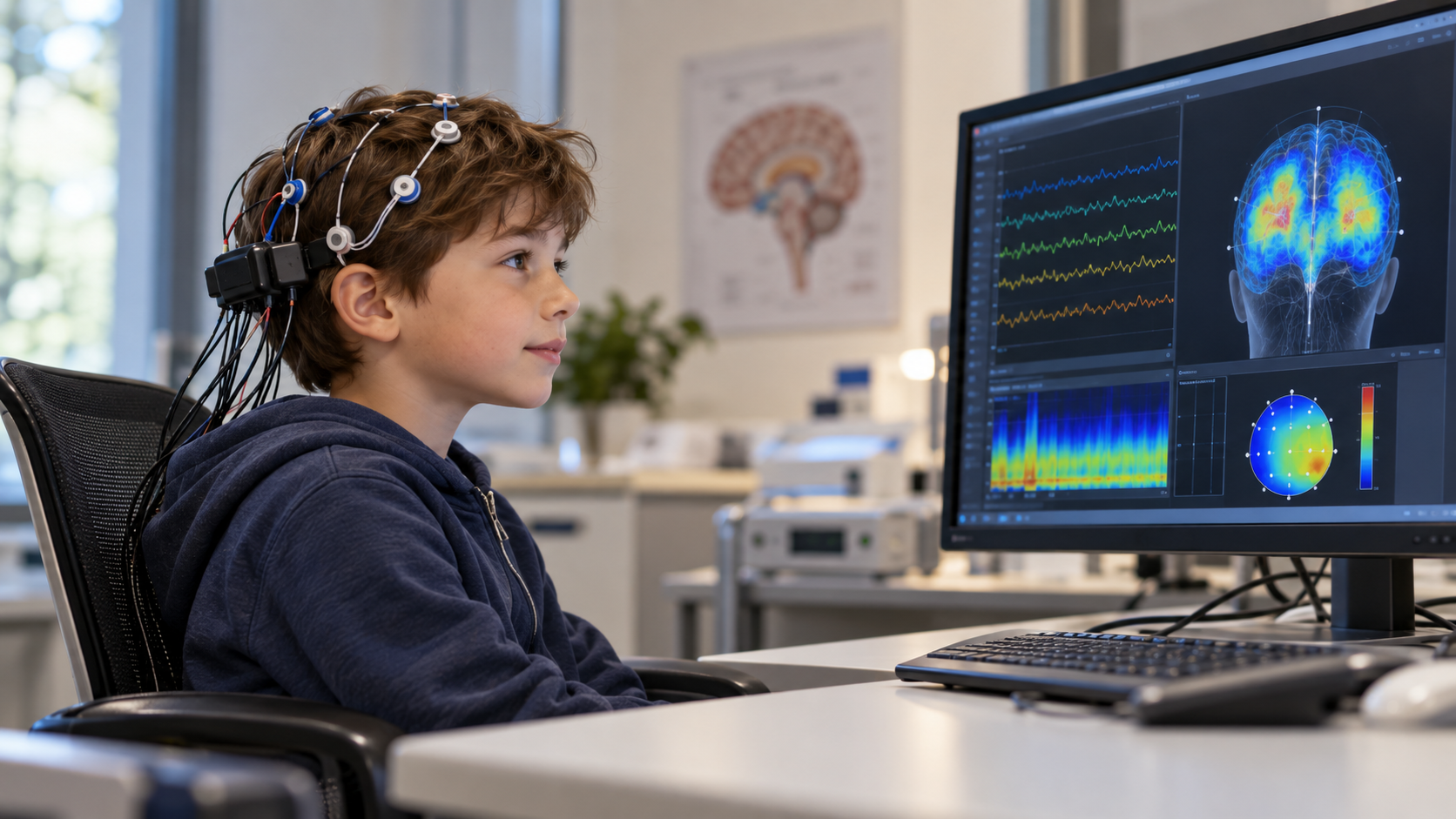
Downloads
Published
2024-07-02
How to Cite
Nadiradze, T., Bakhtadze, S., Kvachadze, I., & Khachapuridze, N. (2024). Use of Neurofeedback to Alter Attention Parameters in Children with Internet Addiction Disorder. Georgian Biomedical and Medical Nexus, 2(3), 127-132. https://doi.org/10.52340/GBMN.2024.01.01.77