
Cardiotoxicity in Breast Cancer Patients: Unveiling Hidden Risks and Evolving Strategies for Cardio-Oncology Care
DOI:
https://doi.org/10.52340/GBMN.2024.01.01.86Keywords:
Breast cancer, cardiotoxicity, cardiovascular risk factors, chemotherapy, global longitudinal strainAbstract
Background: Advancements in breast cancer treatment have significantly increased patient survival rates; however, associated treatments, particularly chemotherapy, introduce various side effects. Despite initial categorization as having low or no cardiovascular risk, this case report highlights a 36-year- old breast cancer patient who exhibited notable changes in biomarkers and strain analyses during treatment. The patient, undergoing concurrent chemotherapy and targeted therapy with paclitaxel and Herceptin, experienced alterations in NT pro-BNP levels and global longitudinal strain (GLS) despite maintaining conventional echocardiographic parameters and reporting no symptoms. Prompt initiation of ACE inhibitor treatment resulted in a reduction in NT pro-BNP levels, emphasizing the importance of monitoring and early intervention in breast cancer patients, even those initially considered low cardiovascular risk, to detect and manage potential cardiotoxic effects effectively. This case underscores the need for vigilant surveillance to enhance cardiovascular care and overall treatment outcomes in breast cancer patients.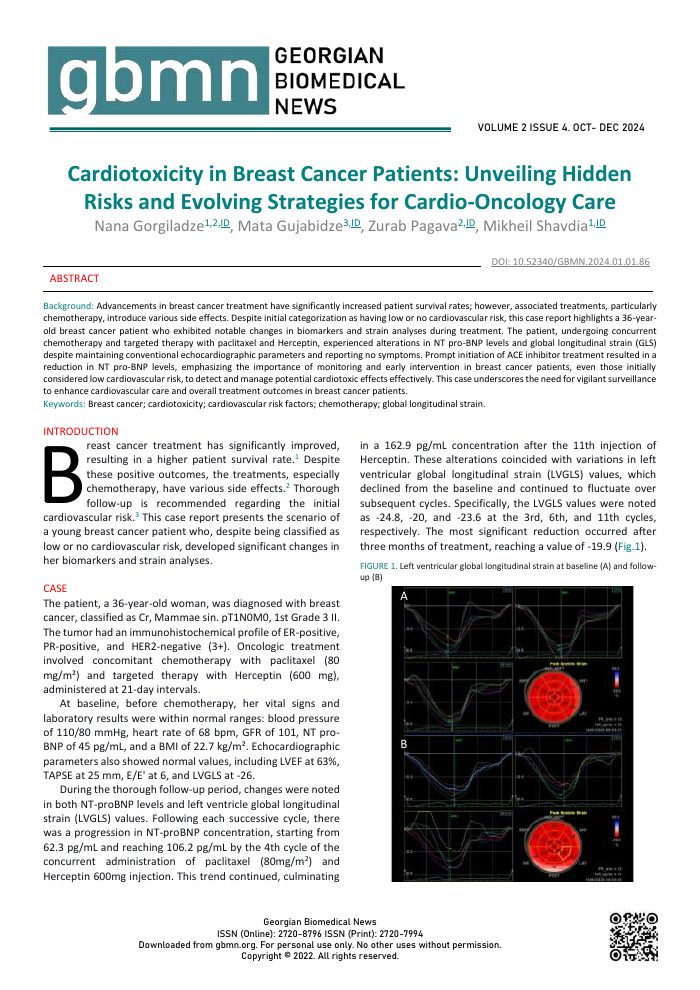
Downloads
Published
2024-10-02
How to Cite
Gorgiladze, N., Gujabidze, M., Pagava, Z., & Shavdia, M. (2024). Cardiotoxicity in Breast Cancer Patients: Unveiling Hidden Risks and Evolving Strategies for Cardio-Oncology Care. Georgian Biomedical and Medical Nexus, 2(4), 167-169. https://doi.org/10.52340/GBMN.2024.01.01.86