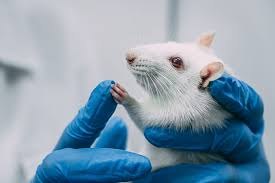
Early Sacubitril/Valsartan Treatment Attenuates Time-of-Day Blood Pressure Variation and Neurohumoral Alterations in DOCA-Salt Hypertensive Rats
DOI:
https://doi.org/10.52340/GBMN.2026.01.01.178Keywords:
Angiotensin II, Arterial hypertension, Circadian rhythm, DOCA-salt hypertension, Endothelin-1, Melatonin, Sacubitril/valsartanAbstract
BACKGROUND. Diurnal blood pressure (BP) variation is strongly associated with cardiovascular morbidity, endothelial dysfunction, and target-organ damage in hypertension. The renin–angiotensin–aldosterone system (RAAS), endothelin-1 (ET-1), and melatonin are important regulators of both vascular tone and circadian hemodynamic rhythms. This study investigated the effects of early sacubitril/valsartan treatment on time-of-day BP variation and neurohumoral alterations in DOCA-salt hypertensive rats. OBJECTIVES. To evaluate the preventive and therapeutic impacts of sacubitril/valsartan on blood pressure fluctuations and related serum biomarkers at specific diurnal time points. METHODS. Forty male rats were randomly divided into four groups (n=10/group): control, DOCA-salt hypertensive, therapeutic sacubitril/valsartan treatment after hypertension induction, and early sacubitril/valsartan treatment initiated simultaneously with hypertension induction. Hypertension was induced by intraperitoneal administration of deoxycorticosterone acetate (DOCA; 25 mg/kg) combined with 1% NaCl and 0.2% KCl in drinking water for 4 weeks. Sacubitril/valsartan was administered orally at 30 mg/kg/day. Systolic BP (SBP), diastolic BP (DBP), and heart rate (HR) were assessed weekly and at three specific time points (09:00, 15:00, and 21:00). Serum levels of ET-1, angiotensin II (Ang II), and melatonin were determined using ELISA. RESULTS. DOCA-salt hypertension significantly increased SBP, DBP, and HR compared with controls (p-values determined via post hoc analysis; p<0.001), accompanied by marked elevations in ET-1 and Ang II levels and reduced melatonin concentrations. Untreated hypertensive rats exhibited significant alterations in time-of-day BP values, with a loss of the normal fluctuations seen in controls. Therapeutic administration of sacubitril/valsartan restored near-normal BP values (SBP: 123.2±10 mmHg; DBP: 59.2±5 mmHg), normalized circadian hemodynamic fluctuations, reduced ET-1 and Ang II concentrations, and restored melatonin levels. Early initiation of treatment exerted an even more pronounced protective effect, preventing the development of hypertension, minimizing diurnal BP variability, and attenuating cardiovascular dysfunction. CONCLUSIONS. Early initiation of sacubitril/valsartan effectively prevents the development of DOCA-salt hypertension, modifies time-of-day hemodynamic variations at the measured points, and regulates serum endothelin-1, melatonin, and angiotensin II profiles. These findings suggest that early neurohumoral modulation with sacubitril/valsartan may confer significant cardioprotective benefits beyond conventional BP reduction, particularly by preserving circadian cardiovascular regulation.References
Unger T, Borghi C, Charchar F, Khan NA, Poulter NR, Prabhakaran D, Ramirez A, Schlaich M, Stergiou GS, Tomaszewski M, Wainford RD, Williams B, Schutte AE. 2020 International Society of Hypertension global hypertension practice guidelines. J Hypertens. 2020 Jun;38(6):982-1004. doi: 10.1097/HJH.0000000000002453. PMID: 32371787.
Huffman MD, Lloyd-Jones DM. Global Burden of Raised Blood Pressure: Coming Into Focus. JAMA. 2017 Jan 10;317(2):142-143. doi: 10.1001/jama.2016.19685. PMID: 28097343.
Nguyen TN, Chow CK. Global and national high blood pressure burden and control. Lancet. 2021 Sep 11;398(10304):932-933. doi: 10.1016/S0140-6736(21)01688-3. Epub 2021 Aug 24. PMID: 34450082.
Verdecchia P, Cavallini C, Angeli F. Advances in the Treatment Strategies in Hypertension: Present and Future. J Cardiovasc Dev Dis. 2022 Mar 3;9(3):72. doi: 10.3390/jcdd9030072. PMID: 35323620; PMCID: PMC8949859.
Lamirault G, Artifoni M, Daniel M, Barber-Chamoux N, Nantes University Hospital Working Group On Hypertension. Resistant Hypertension: Novel Insights. Curr Hypertens Rev. 2020;16(1):61-72. doi: 10.2174/1573402115666191011111402. PMID: 31622203.
Chia R, Pandey A, Vongpatanasin W. Resistant hypertension-defining the scope of the problem. Prog Cardiovasc Dis. 2020 Jan-Feb;63(1):46-50. doi: 10.1016/j.pcad.2019.12.006. Epub 2019 Dec 19. PMID: 31863785; PMCID: PMC8272692.
Vajapey R, Rini D, Walston J, Abadir P. The impact of age-related dysregulation of the angiotensin system on mitochondrial redox balance. Front Physiol. 2014 Nov 24;5:439. doi: 10.3389/fphys.2014.00439. PMID: 25505418; PMCID: PMC4241834.
Triebel H, Castrop H. The renin angiotensin aldosterone system. Pflugers Arch. 2024 May;476(5):705-713. doi: 10.1007/s00424-024-02908-1. Epub 2024 Jan 17. PMID: 38233636; PMCID: PMC11033231.
Wright JW, Harding JW. The brain renin-angiotensin system: a diversity of functions and implications for CNS diseases. Pflugers Arch. 2013 Jan;465(1):133-51. doi: 10.1007/s00424-012-1102-2. Epub 2012 Apr 26. PMID: 22535332.
O. Baltatu, A. Lippoldt, A. Hansson, D. Ganten, and M. Bader, “Local renin-angiotensin system in the pineal gland,” Molecular Brain Research, vol. 54, no. 2, pp. 237–242, 1998.
Campos LA, Cipolla-Neto J, Amaral FG, Michelini LC, Bader M, Baltatu OC. The Angiotensin-melatonin axis. Int J Hypertens. 2013;2013:521783. doi: 10.1155/2013/521783. Epub 2013 Jan 8. PMID: 23365722; PMCID: PMC3556444.
Baltatu O, Afeche SC, José dos Santos SH, Campos LA, Barbosa R, Michelini LC, Bader M, Cipolla-Neto J. Locally synthesized angiotensin modulates pineal melatonin generation. J Neurochem. 2002 Jan;80(2):328-34. doi: 10.1046/j.0022-3042.2001.00701.x. PMID: 11902123.
Veerasingham SJ, Raizada MK. Brain renin-angiotensin system dysfunction in hypertension: recent advances and perspectives. Br J Pharmacol. 2003 May;139(2):191-202. doi: 10.1038/sj.bjp.0705262. PMID: 12770924; PMCID: PMC1573858.
Biancardi VC, Son SJ, Ahmadi S, Filosa JA, Stern JE. Circulating angiotensin II gains access to the hypothalamus and brain stem during hypertension via breakdown of the blood-brain barrier. Hypertension. 2014 Mar;63(3):572-9. doi: 10.1161/HYPERTENSIONAHA.113.01743. Epub 2013 Dec 16. PMID: 24343120; PMCID: PMC4080808.
Aksit E, Gursul E, Aydin F, Samsa M, Ozcelik F. Non-dipper hypertension is associated with slow coronary flow among hypertensives with normal coronary angiogram. Cardiovasc J Afr. 2017 Jan/Feb 23;28(1):14-18. doi: 10.5830/CVJA-2016-045. Epub 2016 May 13. PMID: 27177043; PMCID: PMC5423430.
Pati P, Fulton DJ, Bagi Z, Chen F, Wang Y, Kitchens J, Cassis LA, Stepp DW, Rudic RD. Low-Salt Diet and Circadian Dysfunction Synergize to Induce Angiotensin II-Dependent Hypertension in Mice. Hypertension. 2016 Mar;67(3):661-8. doi: 10.1161/HYPERTENSIONAHA.115.06194. Epub 2016 Jan 18. PMID: 26781276; PMCID: PMC4752410.
Hermida RC, Ayala DE, Mojón A, Fernández JR. Influence of circadian time of hypertension treatment on cardiovascular risk: results of the MAPEC study. Chronobiol Int. 2010 Sep;27(8):1629-51. doi: 10.3109/07420528.2010.510230. PMID: 20854139.
Kong F, Liu Q, Zhou Q, Xiao P, Bai Y, Wu T, Xia L. Dietary salt intake and cardiovascular outcomes: an umbrella review of meta-analyses and dose-response evidence. Ann Med. 2025Dec;57(1):2582065.doi:10.1080/07853890.2025.2582065. Epub 2025 Nov 16. PMID: 41243115; PMCID: PMC12624901.
de la Sierra A, Gorostidi M, Banegas JR, Segura J, de la Cruz JJ, Ruilope LM. Nocturnal hypertension or nondipping: which is better associated with the cardiovascular risk profile? Am J Hypertens. 2014 May;27(5):680-7. doi: 10.1093/ajh/hpt175. Epub 2013 Sep 23. PMID: 24061070.
Ohlander J, Keskin MC, Stork J, Radon K. Shift work and hypertension: Prevalence and analysis of disease pathways in a German car manufacturing company. Am J Ind Med. 2015 May;58(5):549-60. doi: 10.1002/ajim.22437. Epub 2015 Mar 13. PMID: 25773725.
Morris CJ, Purvis TE, Hu K, Scheer FA. Circadian misalignment increases cardiovascular disease risk factors in humans. Proc Natl Acad Sci U S A. 2016 Mar 8;113(10):E1402-11. doi: 10.1073/pnas.1516953113. Epub 2016 Feb 8. PMID: 26858430; PMCID: PMC4790999.
Fang C, Lei J, Zhou SX, Zhang YL, Yuan GY, Wang JF. Association of higher resistin levels with inflammatory activation and endothelial dysfunction in patients with essential hypertension. Chin Med J (Engl). 2013 Feb;126(4):646-9. PMID: 23422182.
Veglio F., Pietrandrea R., Ossola M., Vignani A., Angeli A. Circadian rhythm of the angiotensin converting enzyme (ACE) activity in serum of healthy adult subjects. Chronobiologia. 1987;14:21–25.
Ohkubo T., Hozawa A., Yamaguchi J., Kikuya M., Ohmori K., Michimata M., Matsubara M., Hashimoto J., Hoshi H., Araki T., et al. Prognostic significance of the nocturnal decline in blood pressure in individuals with and without high 24-h blood pressure: The Ohasama study. J. Hypertens. 2002;20:2183–2189. doi: 10.1097/00004872-200211000-00017.
Virag J.A., Lust R.M. Circadian influences on myocardial infarction. Front. Physiol. 2014;5:422. doi: 10.3389/fphys.2014.00422.
Rajzer P, Biegus J. Sacubitril/valsartan in a wide spectrum of heart failure patients (from mechanisms of action to outcomes in specific populations). Heart Fail Rev. 2025 Mar;30(2):387-405. doi: 10.1007/s10741-024-10471-1. Epub 2025 Jan 7. PMID: 39776087; PMCID: PMC11802626.
Polina I, Domondon M, Fox R, Sudarikova AV, Troncoso M, Vasileva VY, Kashyrina Y, Gooz MB, Schibalski RS, DeLeon-Pennell KY, Fitzgibbon WR, Ilatovskaya DV. Differential effects of low-dose sacubitril and/or valsartan on renal disease in salt-sensitive hypertension. Am J Physiol Renal Physiol. 2020 Jul 1;319(1):F63-F75. doi: 10.1152/ajprenal.00125.2020. Epub 2020 May 28. PMID: 32463726; PMCID: PMC7468826.
Schiffrin EL, Larivière R, Li JS, Sventek P. Enhanced expression of the endothelin-1 gene in blood vessels of DOCA-salt hypertensive rats: correlation with vascular structure. J Vasc Res. 1996 May-Jun;33(3):235-48. doi: 10.1159/000159151. PMID: 8924521.
Schiffrin EL. Role of endothelin-1 in hypertension and vascular disease. Am J Hypertens. 2001 Jun;14(6 Pt 2):83S-89S. doi: 10.1016/s0895-7061(01)02074-x. PMID: 11411770.
Lin YJ, Kwok CF, Juan CC, Hsu YP, Shih KC, Chen CC, Ho LT. Angiotensin II enhances endothelin-1-induced vasoconstriction through upregulating endothelin type A receptor. Biochem Biophys Res Commun. 2014 Aug 22;451(2):263 doi: 10.1016/j.bbrc.2014.07.119. Epub 2014 Aug 1. PMID: 25088996.