
The Humoral Immunity Features of COVID-19 in West Georgia Population
Keywords:
COVID-19, humoral immunity, SARS-CoV-2 viral infection, vaccinationAbstract
Background: SARS-CoV-2 is still active and spreading among us, even though the COVID-19 disease pandemic is believed to have been terminated due to the extraordinary efforts of healthcare professionals and scientists. Thousands of people are being infected today. Objectives: The current study aimed to analyze existing data on the transmission of the SARS-CoV-2 virus among the West Georgia population and investigate the humoral immune response generated by the viral infection and vaccination as well. Methods: The research was conducted between March 2022 and March 2023. The study group included 400 adults (69% women and 31% men) residing in Kutaisi. Study patients were distributed among four groups: (i) Group 1: patients with confirmed SARS-CoV-2 infection without previous vaccination; (ii) Group 2: previously vaccinated patients without SARS-CoV-2 infection; (iii) Group 3: previously vaccinated patients with confirmed SARS-CoV-2 infection; and (iv) Group 4: uninfected and unvaccinated patients. All groups were divided into subgroups with positive and negative humoral responses. Each subgroup was further divided into subgroups based on gender. Data were analyzed by STATA 17. Statistical significance was defined as p < 0.05. Results: 55% of the study population was vaccinated, mainly with Pfizer's vaccine. The incidence of SARS-CoV-2 infection was equal for women and men, and they developed active immunity almost equally. The average rate of humoral immunity was 60%, with the highest rate (≈85% (r<0.05, p<0.001) in the triple-vaccinated individuals. Finally, the concentration of anti-SARS-CoV-2 IgG antibodies was particularly high (32%) in the previously vaccinated patients with confirmed SARS-CoV-2 infection. The average duration of effective concentration of G class immunoglobulins was maintained for 6-12 months. Conclusions: In most cases, the SARS-CoV-2 infection in combination with the Pfizer vaccination induces a maximal humoral immune response, although not always and not for long.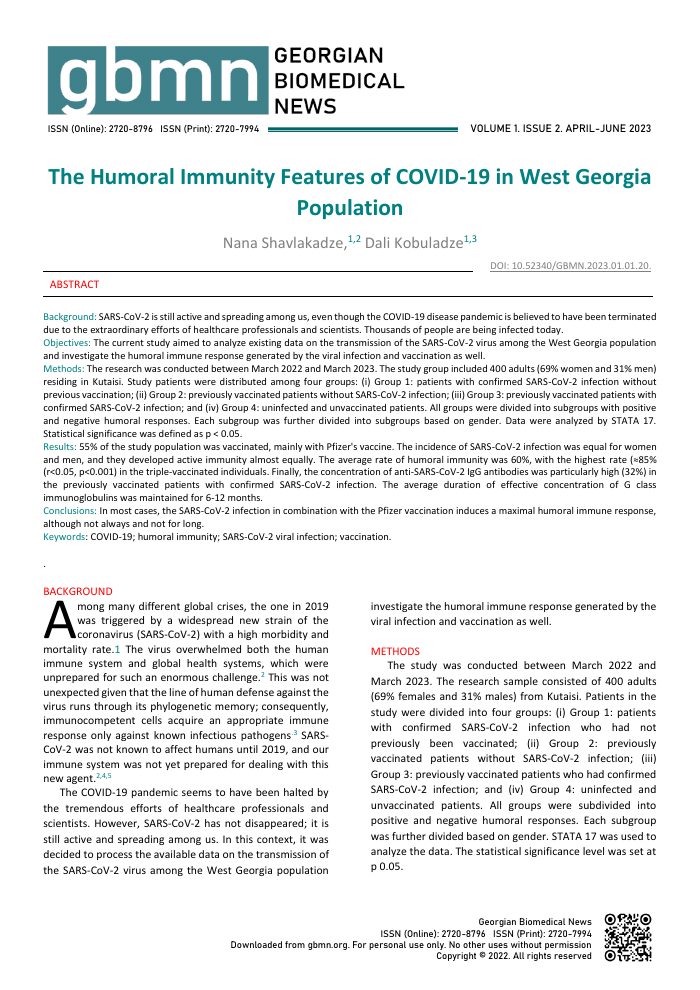
Downloads
Published
2023-04-29
How to Cite
Shavlakadze, N., & Kobuladze, D. (2023). The Humoral Immunity Features of COVID-19 in West Georgia Population. Georgian Biomedical and Medical Nexus, 1(2), 72-74. https://gbmn.org/article/view/205