
Prevalence of Postpartum Depression, Link to Primiparity and Associated Factors Among First-Time Mothers in Georgia
Keywords:
Multiparas, online survey, postpartum depression, primiparasAbstract
Background: Postpartum depression (PPD) is a complex disorder involving physical, emotional, and behavioral changes, making motherhood one of the most horrible experiences in a female's life. First-time mothers, who struggle more adjusting themselves to the role of mother, are at higher risk of developing postpartum depression compared to multipara females. Objectives: The current study aimed to examine the risk factors and significant correlations of postpartum depression among first-time mothers in Georgia, compare PPD rates between primiparas and multiparas, and calculate the prevalence of PPD. Methods: The article is based on a cross-sectional study conducted as an online survey. A linear regression analysis investigated the dependence between potential risk factors and PPD among first-time mothers. The variables were examined individually to identify their significance for a 95% confidence interval. In addition, a chi-squared test was used to compare the rates of PPD between first-time mothers and multigravida females. Results: The prevalence was 49.6%, and the rates of PPD were significantly higher in first-time mothers (54.9%) than in multipara females (16.9%). Significant predictors of PPD in primiparas included advanced age (95% CI: 0.28 - 0.46), physiologic mode of delivery (95% CI: 0.85 - 3.59), higher economic status (95% CI: 1.84 - 3.25), and lack of family support (95% CI: -2.74 - -0.54). Obstetric pain, newborn health problems, education level, and employment were not correlated with increased risks of PPD. Conclusions: Overall, this research study aims to address the lack of information on PPD in the Georgian population and provide a better understanding of the prevalence and associated factors of PPD among first-time mothers in Georgia. By identifying the prevalence and risk factors for PPD in this population, it will be possible to develop effective interventions and support systems to help mitigate the impact of PPD on first-time mothers in Georgia.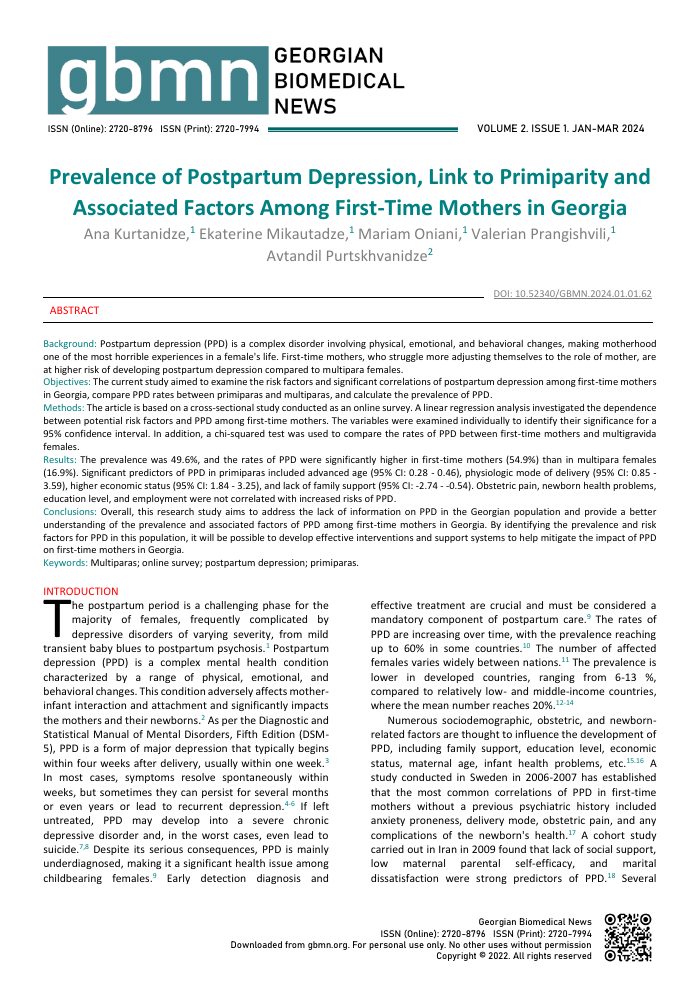
Downloads
Published
2024-03-11
Issue
Section
Original Research
Categories
How to Cite
Kurtanidze, A., Mikautadze, E., Oniani, M., Prangishvili, V., & Purtskhvanidze, A. (2024). Prevalence of Postpartum Depression, Link to Primiparity and Associated Factors Among First-Time Mothers in Georgia. Georgian Biomedical and Medical Nexus, 2(1), 47-54. https://gbmn.org/article/view/247