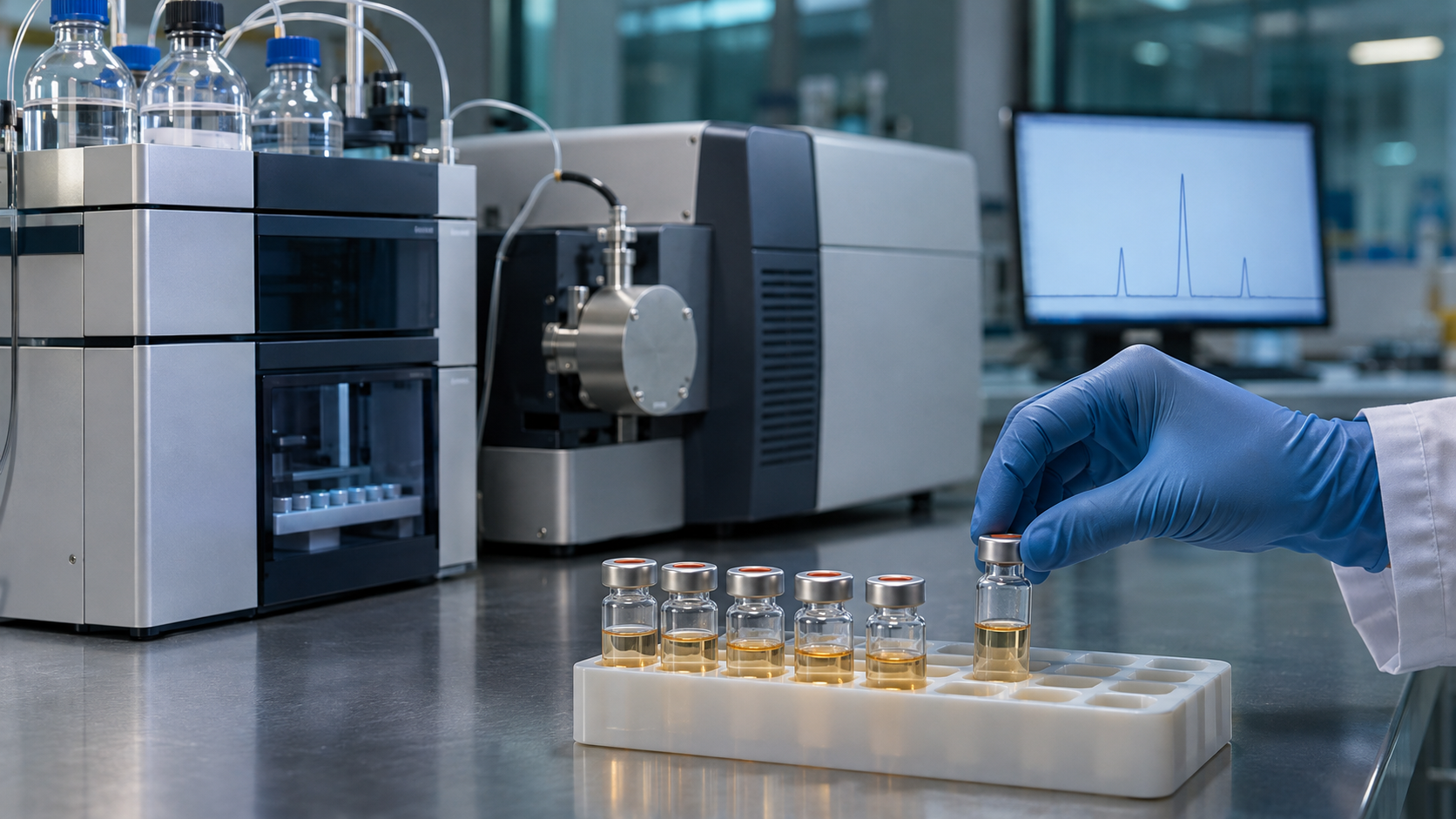
Development and Validation of an Ultra-High-Performance Liquid Chromatography–Tandem Mass Spectrometry Method for the Determination of MAM-2201 Metabolites in Human Urine
Keywords:
MAM-2201 N-(4-hydroxypentyl); MAM-2201 N-pentanoic acid; Synthetic cannabinoids; Ultra-High-Performance Liquid Chromatography–Tandem Mass Spectrometry (UHPLC-MS/MS).Abstract
Background. Although synthetic cannabinoids (SCs) are controlled and banned in many countries, they remain prevalent and continue to pose a serious public health problem due to severe intoxications and fatal cases. Their analytical detection is challenging because SCs undergo extensive metabolism, and urine rarely contains parent compounds. Therefore, forensic laboratories need analytical methods to identify and quantify synthetic cannabinoid metabolites.
Objectives. This study aimed to develop and validate a targeted UHPLC-MS/MS method to determine MAM-2201 metabolites in human urine.
Methods. Urine samples were hydrolyzed with β-glucuronidase and extracted via solid-phase extraction using Bond Elut Plexa PCX cartridges. Analysis was performed using a UHPLC–MS/MS system in positive electrospray ionization (ESI) mode with MRM detection on a C18 column.
Results. The method demonstrated good linearity (0.5-45 ng/mL, 0.75-45 ng/mL; r²≥0.996), minimal matrix effects, high recovery, and acceptable accuracy and precision (<15% RSD). LODs were 0.25 and 0.5 ng/mL, and LLOQs were 0.5 and 0.75 ng/mL, respectively. No carryover was observed, and analytes were stable under the tested conditions.
Conclusions. The developed UHPLC-MS/MS method provides a sensitive, simple, and rapid approach for reliable determination of MAM-2201 metabolites in human urine. It is suitable for forensic and toxicological applications.
References
1. European Monitoring Center for Drugs and Drug Addiction (EMCDDA). European Drug Report 2024: Trends and Developments. Luxembourg: Publications Office of the European Union; 2024.
2. European Monitoring Center for Drugs and Drug Addiction. Fentanyl and synthetic cannabinoids: driving greater complexity into the drug situation. An update from the EU Early Warning System. Luxembourg: European Monitoring Center for Drugs and Drug Addiction; 2018.
3. Parliament of Georgia. Law of Georgia on New Psychoactive Substances. Published 2014. Accessed March 27, 2026. https://matsne.gov.ge
4. Drug Enforcement Administration. Drugs of Abuse: A DEA Resource Guide. Washington, DC: U.S. Department of Justice, Drug Enforcement Administration; 2024.
5. Alzu’bi A, Almahasneh F, Khasawneh R, Abu-El-Rub E, Baker WB, Al-Zoubi RM. The synthetic cannabinoids menace: a review of health risks and toxicity. Eur J Med Res. 2024 Jan 12;29(1):49. doi:10.1186/s40001-023-01443-6.
6. Coccini T, De Simone U, Lonati D, Scaravaggi G, Marti M, Locatelli C. MAM-2201, One of the Most Potent—Naphthoyl Indole Derivative—Synthetic Cannabinoids, Exerts Toxic Effects on Human Cell-Based Models of Neurons and Astrocytes. Neurotox Res. 2021 Aug;39(4):1251–73. doi:10.1007/s12640-021-00369-3.
7. Corli G, Tirri M, Bilel S, Arfè R, Coccini T, Roda E, et al. MAM-2201 acute administration impairs motor, sensorimotor, prepulse inhibition, and memory functions in mice: a comparison with its analog AM-2201. Psychopharmacology. 2023 Jul;240(7):1435–52. doi:10.1007/s00213-023-06378-8.
8. Kelkar AH, Smith NA, Martial A, Moole H, Tarantino MD, Roberts JC. An Outbreak of Synthetic Cannabinoid–Associated Coagulopathy in Illinois. N Engl J Med. 2018 Sep 27;379(13):1216–23. doi:10.1056/NEJMoa1807652.
9. Roque-Bravo R, Silva RS, Malheiro RF, Carmo H, Carvalho F, Da Silva DD, et al. Synthetic Cannabinoids: A Pharmacological and Toxicological Overview. Annu Rev Pharmacol Toxicol. 2023 Jan 20;63(1):187–209. doi:10.1146/annurev-pharmtox-031122-113758.
10. Irie T, Kikura-Hanajiri R, Usami M, Uchiyama N, Goda Y, Sekino Y. MAM-2201, a synthetic cannabinoid drug of abuse, suppresses the synaptic input to cerebellar Purkinje cells via activation of presynaptic CB1 receptors. Neuropharmacology. 2015 Aug;95:479–91. doi:10.1016/j.neuropharm.2015.02.025.
11. Kong TY, Kim JH, Choi WG, Lee JY, Kim HS, Kim JY, et al. Metabolic characterization of (1-(5-fluoropentyl)-1H-indol-3-yl)(4-methyl-1-naphthalenyl)-methanone (MAM-2201) using human liver microsomes and cDNA-overexpressed cytochrome P450 enzymes. Anal Bioanal Chem. 2017 Feb;409(6):1667–80. doi:10.1007/s00216-016-0113-9.
12. Jang M, Shin I, Yang W, Chang H, Yoo HH, Lee J, et al. Determination of major metabolites of MAM-2201 and JWH-122 in in vitro and in vivo studies to distinguish their intake. Forensic Science International. 2014 Nov;244:85–91. doi:10.1016/j.forsciint.2014.08.008.
13. Scientific Working Group for Forensic Toxicology (SWGTOX) Standard Practices for Method Validation in Forensic Toxicology. Journal of Analytical Toxicology. 2013 Sep 1;37(7):452–74. doi:10.1093/jat/bkt054.
14. Diao X, Carlier J, Zhu M, Pang S, Kronstrand R, Scheidweiler KB, et al. In vitro and in vivo human metabolism of a new synthetic cannabinoid NM-2201 (CBL-2201). Forensic Toxicol. 2017 Jan;35(1):20–32. doi:10.1007/s11419-016-0326-9.
15. Jang M, Shin I, Kim J, Yang W. Simultaneous quantification of 37 synthetic cannabinoid metabolites in human urine by liquid chromatography-tandem mass spectrometry. Forensic Toxicol. 2015 Jul;33(2):221–34. doi:10.1007/s11419-015-0265-x.
16. Murtazashvili M, Jokhadze M, Chikviladze T, et al. Quantification of AB-CHMINACA Metabolites in Urine by Validated Ultra-High-Performance Liquid Chromatography–Tandem Mass Spectrometry Method. Georgian Biomed News. 2026; doi:10.52340/GBMN.2026.01.01.162.
17. Borg D, Tverdovsky A, Stripp R. A Fast and Comprehensive Analysis of 32 Synthetic Cannabinoids Using Agilent Triple Quadrupole LC–MS-MS. J Anal Toxicol. 2017 Jan;41(1):06–16. doi:10.1093/jat/bkw104.
18. Benvenuto K, Botch-Jones S, Mallet C. Multidimensional LC/MS-MS analysis of synthetic cannabinoids in urine, plasma, and edibles. J Forensic Sci Criminol. 2017;5:502.