
Olive Oil as a Source of Bioactive Compounds: The Role of Polyphenols, Antioxidants, and Other Constituents in Its Health-Related Effects
Keywords:
Antioxidant activity, Extra-virgin olive oil, Hydroxytyrosol, Olea europaea, Oleocanthal, Olive oil, Phenolic compoundsAbstract
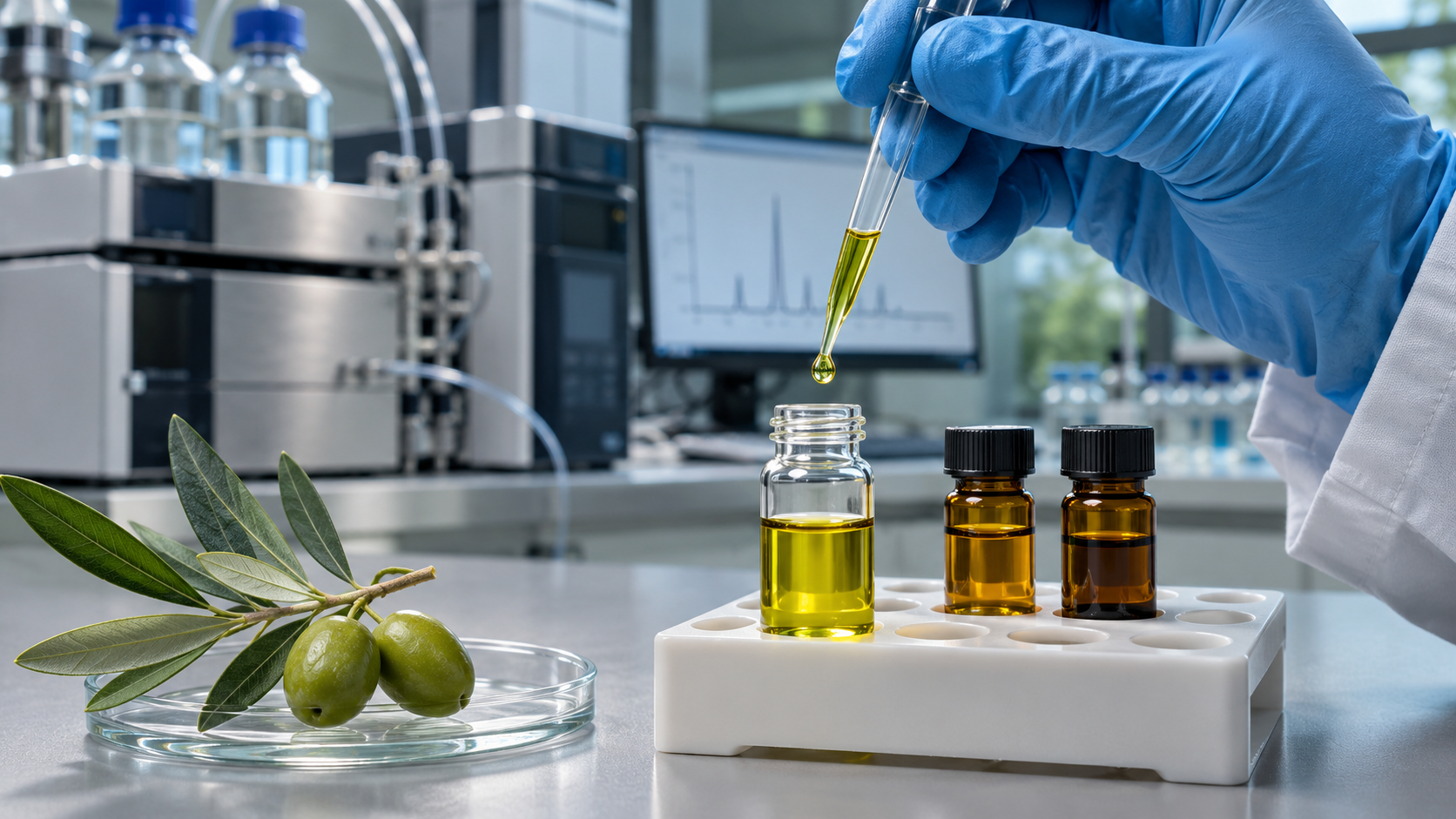
Olive oil has been used for nutritional, medicinal, cosmetic, and cultural purposes for millennia. Contemporary research indicates that its health-related properties are associated not only with its high content of monounsaturated fatty acids, particularly oleic acid, but also with a complex fraction of bioactive constituents. This review integrates historical perspectives with current evidence on the chemical composition, major bioactive compounds, mechanisms of action, and potential health-related effects of olive oil and other Olea europaea L-derived products. It focuses on hydroxytyrosol, tyrosol, oleuropein and ligstroside derivatives, oleacein, oleocanthal, and other minor constituents. Experimental, epidemiological, and clinical evidence suggests that these compounds may influence oxidative stress, inflammatory signaling, lipid metabolism, endothelial function, and other pathways relevant to chronic disease. The most consistent clinical evidence supports olive oil consumption, particularly within a Mediterranean dietary pattern, for cardiovascular and overall health.
In contrast, evidence for neuroprotective, cancer-related, and wound-healing effects remains heterogeneous. Olive leaves and olive-processing by-products also represent promising sources of bioactive phenolic compounds. Further standardized clinical studies are required to clarify their bioavailability, dose-response relationships, long-term safety, and clinical relevance.
References
1. Kaniewski D, Van Campo E, Boiy T, Terral JF, Khadari B, Besnard G. Primary domestication and early uses of the emblematic olive tree: palaeobotanical, historical and molecular evidence from the Middle East. Biol Rev Camb Philos Soc. 2012;87(4):885-899. doi:10.1111/j.1469-185X.2012.00229. x.
2. Mazzini I. L'uso dell'olio d'oliva nella medicina del mondo antico [Use of olive oil in medicine in the ancient world]. Medizinhist J. 2000;35(2):105-126.
3. Romani A, Ieri F, Urciuoli S, Noce A, Marrone G, Nediani C, Bernini R. Health effects of phenolic compounds found in extra-virgin olive oil, by-products, and leaf of Olea europaea L. Nutrients. 2019;11(8):1776. doi:10.3390/nu11081776.
4. Karković Marković A, Torić J, Barbarić M, Jakobušić Brala C. Hydroxytyrosol, tyrosol and derivatives and their potential effects on human health. Molecules. 2019;24(10):2001. doi:10.3390/molecules24102001.
5. Visioli F, Davalos A, López de Las Hazas MC, Crespo MC, Tomé-Carneiro J. An overview of the pharmacology of olive oil and its active ingredients. Br J Pharmacol. 2020;177(6):1316-1330. doi:10.1111/bph.14782.
6. Donahue JF. Culinary and medicinal uses of wine and olive oil. In: Irby GL, ed. A Companion to Science, Technology, and Medicine in Ancient Greece and Rome. Wiley Blackwell; 2016:605-617. doi:10.1002/9781118373057.ch37.
7. Hartmann A. Back to the roots—dermatology in ancient Egyptian medicine. J Dtsch Dermatol Ges. 2016;14(4):389-396. doi:10.1111/ddg.12947.
8. Aliasl J, Khoshzaban F. Traditional herbal remedies for burn wound healing in Canon of Avicenna. Jundishapur J Nat Pharm Prod. 2013;8(4):192-196. doi:10.17795/jjnpp-11686.
9. Kupatadze K, Malazonia D, Gverdtsiteli M. The overview of chemical knowledge in eighteenth century Georgia according to the chemistry book by King Vakhtang VI. Orbital Electron J Chem. 2016;8(3):204-210. doi:10.17807/orbital.v8i3.839.
10. Schwingshackl L, Hoffmann G. Monounsaturated fatty acids and risk of cardiovascular disease: synopsis of the evidence available from systematic reviews and meta-analyses. Nutrients. 2012;4(12):1989-2007. doi:10.3390/nu4121989.
11. Covas MI, Nyyssönen K, Poulsen HE, Kaikkonen J, Zunft HJF, Kiesewetter H, Gaddi A, de la Torre R, Mursu J, Bäumler H, Nascetti S, Salonen JT, Fitó M, Virtanen J, Marrugat J; EUROLIVE Study Group. The effect of polyphenols in olive oil on heart disease risk factors: a randomized trial. Ann Intern Med. 2006;145(5):333-341. doi:10.7326/0003-4819-145-5-200609050-00006.
12. Beauchamp GK, Keast RSJ, Morel D, Lin J, Pika J, Han Q, Lee CH, Smith AB III, Breslin PAS. Phytochemistry: ibuprofen-like activity in extra-virgin olive oil. Nature. 2005;437(7055):45-46. doi:10.1038/437045a.
13. Lozano-Castellón J, López-Yerena A, Domínguez-López I, Siscart-Serra A, Fraga N, Sámano S, López-Sabater C, Lamuela-Raventós RM, Vallverdú-Queralt A, Pérez M. Extra virgin olive oil: a comprehensive review of efforts to ensure its authenticity, traceability, and safety. Compr Rev Food Sci Food Saf. 2022;21(3):2639-2664. doi:10.1111/1541-4337.12949.
14. Galmés S, Reynés B, Palou M, Palou-March A, Palou A. Absorption, distribution, metabolism, and excretion of the main olive tree phenols and polyphenols: a literature review. J Agric Food Chem. 2021;69(18):5281-5296. doi:10.1021/acs.jafc.1c00737.
15. Miró-Casas E, Covas MI, Fitó M, Farré-Albadalejo M, Marrugat J, de la Torre R. Tyrosol and hydroxytyrosol are absorbed from moderate and sustained doses of virgin olive oil in humans. Eur J Clin Nutr. 2003;57(1):186-190. doi:10.1038/sj.ejcn.1601532.
16. Parkinson L, Cicerale S. The health benefiting mechanisms of virgin olive oil phenolic compounds. Molecules. 2016;21(12):1734. doi:10.3390/molecules21121734.
17. D'Archivio M, Santangelo C, Silenzi A, Scazzocchio B, Varì R, Masella R. Dietary EVOO polyphenols and gut microbiota interaction: are there any sex/gender influences? Antioxidants (Basel). 2022;11(9):1744. doi:10.3390/antiox11091744.
18. Abdoli A, Shahbazi R, Zoghi G, Davoodian P, Kheirandish S, Azad M, Kheirandish M. The effect of topical olive oil dressing on the healing of grade 1 and 2 diabetic foot ulcers: an assessor-blind randomized controlled trial in type 2 diabetes patients. Diabetes Metab Syndr. 2022;16(12):102678. doi:10.1016/j.dsx.2022.102678.
19. Taheri M, Amiri-Farahani L, Haghani S, Shokrpour M, Shojaii A. The effect of olive cream on pain and healing of caesarean section wounds: a randomised controlled clinical trial. J Wound Care. 2022;31(3):244-253. doi:10.12968/jowc.2022.31.3.244.
20. Nunes MA, Pimentel FB, Costa ASG, Alves RC, Oliveira MBPP. Olive by-products for functional and food applications: challenging opportunities to face environmental constraints. Innov Food Sci Emerg Technol. 2016;35:139-148. doi:10.1016/j.ifset.2016.04.016.
21. Rossi T, Bassani B, Gallo C, Maramotti S, Noonan DM, Albini A, Bruno A. Effect of a purified extract of olive mill wastewater on endothelial cell proliferation, apoptosis, migration and capillary-like structure in vitro and in vivo. J Bioanal Biomed. 2015;S12:6-13. doi:10.4172/1948-593X.S12-006.
22. Baci D, Gallazzi M, Cascini C, Tramacere M, De Stefano D, Bruno A, Noonan DM, Albini A. Downregulation of pro-inflammatory and pro-angiogenic pathways in prostate cancer cells by a polyphenol-rich extract from olive mill wastewater. Int J Mol Sci. 2019;20(2):307. doi:10.3390/ijms20020307.
23. Benedetto N, Calabrone L, Gutmańska K, Macrì N, Cerrito MG, Ricotta R, Pelosi G, Bruno A, Noonan DM, Albini A. An olive oil mill wastewater extract improves chemotherapeutic activity against breast cancer cells while protecting from cardiotoxicity. Front Cardiovasc Med. 2022;9:867867. doi:10.3389/fcvm.2022.867867.
24. Guasch-Ferré M, Li Y, Willett WC, Sun Q, Sampson L, Salas-Salvadó J, Martínez-González MA, Stampfer MJ, Hu FB. Consumption of olive oil and risk of total and cause-specific mortality among U.S. adults. J Am Coll Cardiol. 2022;79(2):101-112. doi:10.1016/j.jacc.2021.10.041.
25. Talhaoui N, Taamalli A, Gómez-Caravaca AM, Fernández-Gutiérrez A, Segura-Carretero A. Phenolic compounds in olive leaves: analytical determination, biotic and abiotic influence, and health benefits. Food Res Int. 2015;77:92-108. doi:10.1016/j.foodres.2015.09.011.
26. Boss A, Bishop KS, Marlow G, Barnett MPG, Ferguson LR. Evidence to support the anti-cancer effect of olive leaf extract and future directions. Nutrients. 2016;8(8):513. doi:10.3390/nu8080513.
27. Razmpoosh E, Abdollahi S, Mousavirad M, Clark CCT, Soltani S. The effects of olive leaf extract on cardiovascular risk factors in the general adult population: a systematic review and meta-analysis of randomized controlled trials. Diabetol Metab Syndr. 2022;14(1):151. doi:10.1186/s13098-022-00920-y.
28. Lockyer S, Rowland I, Spencer JPE, Yaqoob P, Stonehouse W. Impact of phenolic-rich olive leaf extract on blood pressure, plasma lipids and inflammatory markers: a randomised controlled trial. Eur J Nutr. 2017;56(4):1421-1432. doi:10.1007/s00394-016-1188-y.
Published
License
Copyright (c) 2026 Georgian Biomedical and Medical Nexus

This work is licensed under a Creative Commons Attribution 4.0 International License.
All articles published in Georgian Biomedical and Medical Nexus are open access and distributed under the terms of the Creative Commons Attribution 4.0 International License (CC BY 4.0), which permits unrestricted use, distribution and reproduction in any medium, provided the original work is properly cited. Copyright is transferred to the journal upon publication; the CC BY 4.0 license applies to all published content and the copyright transfer does not restrict these rights.
